NITI Ventures logo

NITI VENTURES

Precision engineering and sealing solutions for industrial applications
Material Selection

Choose the right material for the actual service conditions.

The same O-ring size can perform very differently depending on the fluid, temperature, pressure, movement, and environment. Explore the material families below and compare the options that best fit your service conditions.
Final material selection should always be checked against actual fluid, temperature, pressure, movement, environment, and any compound-specific approval requirement.
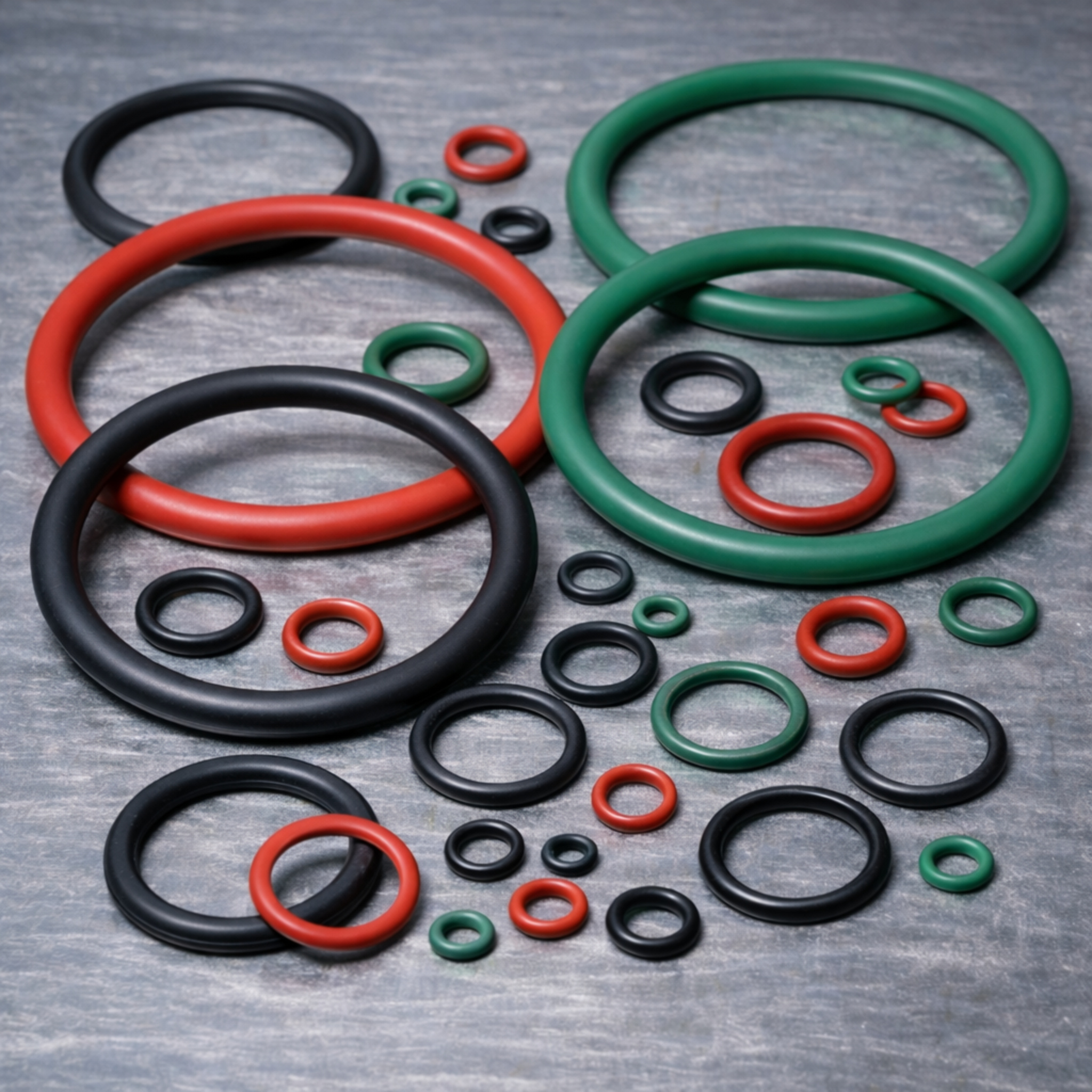
Assorted O-rings

What customers should check first

Application basics

What fluid or media will the O-ring touch? What is the normal operating temperature and what are the short-term peaks? Is the seal static or dynamic?

Environment and approvals

Will the application see ozone, weather, UV, steam, or cleaning chemicals? Is there any approval requirement such as FDA-grade, NSF, or detectable compounds?

Need help choosing the right material? Tell us your fluid, temperature, pressure, size, and whether the seal is static or dynamic. We can help review the most suitable starting options before final size and compound selection.

Materials

Explore the material options below, including temperature range, best uses, compatibility guidance, and typical applications.

NBR

Nitrile (NBR) O-Rings

Nitrile rubber, also known as NBR or Buna-N, is one of the most commonly used sealing elastomers for general industrial service. It is widely chosen for...

Typical temperature: About -30°C to +100°C typical. Special compounds can extend higher in some applications.
Best for: Mineral oils and greases, Hydraulic fluids, Diesel and fuel systems
Explore material
FKM

FKM O-Rings

FKM is a premium fluoroelastomer family used where O-rings must handle higher temperatures, fuels, oils, and broader chemical exposure than standard NBR...

Typical temperature: About -20°C to +200°C typical, with short-term peaks higher in some formulations.
Best for: High-temperature oil sealing, Fuel systems, Aggressive industrial fluids
Explore material
EPDM

EPDM O-Rings

EPDM is widely used where sealing performance is needed in water-based environments or outdoor service. It is known for strong resistance to water, steam...

Typical temperature: About -40°C to +120°C typical, with some grades extending higher depending on formulation.
Best for: Water and hot water service, Steam in suitable compounds, Outdoor weather exposure
Explore material
Silicone

Silicone (VMQ) O-Rings

Silicone is valued for its excellent high- and low-temperature flexibility, strong resistance to ozone, UV, weathering, and aging, and suitability for...

Typical temperature: About -60°C to +200°C typical, with specialty grades extending beyond this range.
Best for: Very high or very low temperature service, Outdoor environments with UV and ozone exposure, Food and pharmaceutical compounds in suitable grades
Explore material
HNBR

HNBR O-Rings

HNBR is an advanced nitrile family developed from NBR to provide better heat resistance, improved ozone and weather resistance, and stronger mechanical...

Typical temperature: About -30°C to +140°C typical, with short-term peaks higher in some compounds.
Best for: Oil and grease sealing in tougher environments, Higher-temperature applications than standard NBR, Dynamic sealing where strength matters
Explore material
PTFE

PTFE O-Rings

PTFE is a high-performance sealing material used where O-rings must handle very aggressive chemicals, very low friction, and wide temperature ranges. It...

Typical temperature: About -200°C to +250°C typical, with broad temperature capability depending on seal design.
Best for: Highly aggressive chemicals, Acids and alkalis, Solvents
Explore material
FFKM

FFKM O-Rings

FFKM is the top-tier elastomer family for the most demanding chemical and high-temperature applications. It is typically selected only when lower-cost...

Typical temperature: About -25°C to +240°C typical, with specialty grades extending significantly higher.
Best for: Critical chemical service, Very high temperature, Demanding process environments
Explore material
Aflas

Aflas O-Rings

Aflas is a specialty material used where seals must perform well in steam, hot water, amines, caustics, sour gas, and high-temperature industrial...

Typical temperature: About -5°C to +200°C typical, with specialty grades extending higher.
Best for: Steam and hot water service, Amines, Caustics and strong bases
Explore material
Neoprene

Neoprene O-Rings

Neoprene is a balanced general-purpose elastomer used where moderate weather resistance, moderate oil resistance, and dependable basic mechanical...

Typical temperature: About -40°C to +100°C typical.
Best for: Balanced general industrial use, Outdoor applications with moderate weather exposure, Moderate oil and grease exposure
Explore material
Polyurethane

Polyurethane O-Rings

Polyurethane is best known for high abrasion resistance, strong tear strength, and excellent performance in dynamic service, especially where pressure and...

Typical temperature: About -35°C to +80°C typical, with specialty grades extending beyond this.
Best for: Dynamic sealing, Abrasion and tear resistance, High-pressure service
Explore material
Fluorosilicone

Fluorosilicone O-Rings

Fluorosilicone combines much of silicone’s temperature flexibility with better resistance to fuels and hydrocarbons. It is commonly considered for...

Typical temperature: About -50°C to +175°C typical, with some grades extending higher.
Best for: Fuel exposure with low-temperature flexibility, Hydrocarbon and petroleum-based fluid exposure, Automotive and aerospace fuel systems
Explore material
Butyl

Butyl O-Rings

Butyl is a specialty elastomer best known for very low gas permeability. It is useful in vacuum and gas-retention applications and in selected hot water...

Typical temperature: About -50°C to +120°C typical.
Best for: Low gas permeability, Vacuum service, Gas sealing
Explore material
ECO

ECO O-Rings

ECO is a specialty elastomer used where fuel resistance, low gas permeability, and good ozone resistance need to be balanced...

Typical temperature: About -40°C to +135°C typical.
Best for: Fuel service, Hydrocarbon oils, Refrigerant-related exposure
Explore material

Need help selecting the right material?

Tell us your fluid, temperature, pressure, size, and whether the seal is static or dynamic. We can help review the most suitable starting options before final size and compound selection.

Inquiry

Usually reply time is within 24 to 48 hours.
Get Quote