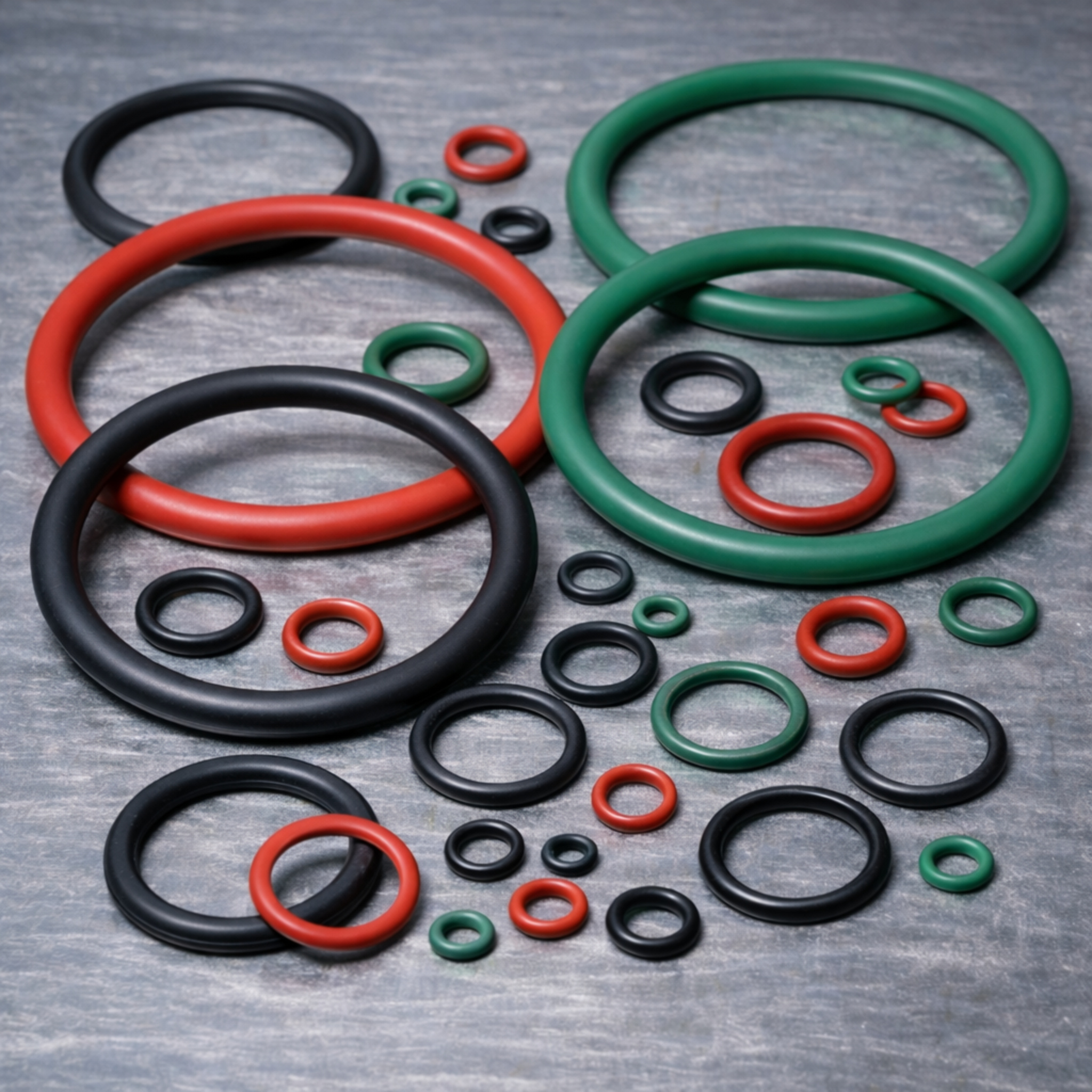
Silicone (VMQ) O-Rings
Silicone is valued for its excellent high- and low-temperature flexibility, strong resistance to ozone, UV, weathering, and aging, and suitability for many food, medical, and static sealing applications when the correct grade is selected.
Typical temperature rangeAbout -60°C to +200°C typical, with specialty grades extending beyond this range.
Other namesSilicone, VMQ, Vinyl methyl silicone
Hardness optionsCommon silicone hardness options often range from about 40 to 80 Shore A.
Compliance optionsDepending on compound, silicone may be available with FDA-compliant options, medical-grade options, USP-related options, and other application-specific compliance.
Best used for
- Very high or very low temperature service
- Outdoor environments with UV and ozone exposure
- Food and pharmaceutical compounds in suitable grades
- Medical and clean applications
- Static sealing where flexibility matters
Key advantages
- Excellent high-temperature resistance
- Excellent low-temperature flexibility
- Very good ozone resistance
- Very good UV and weathering resistance
Performs well in
- Ozone
- UV exposure
- Weathering
- Aging environments
- Dry heat
- Clean static-seal environments in suitable grades
Use with caution or avoid
- Abrasive dynamic service
- Steam service in general-purpose grades
- Many solvents
- Many oils where stronger oil resistance is required
- Applications needing high tear or wear resistance
Typical applications
- Static seals
- Food and beverage equipment in suitable grades
- Medical and pharmaceutical devices in suitable grades
- Outdoor equipment
- Electrical enclosures
- General high- and low-temperature sealing
Common industries
- Food processing
- Medical
- Pharmaceutical
- Electronics
- Outdoor equipment
- General industrial static sealing
When to choose Silicone (VMQ)
Choose Silicone when you need very wide temperature flexibility, strong ozone and UV resistance, soft flexible sealing, or clean and specialty-grade suitability.
When not to choose Silicone (VMQ): Avoid or review carefully when your application involves strong abrasion, heavy wear, demanding dynamic sealing, or oil and solvent exposure where another material is better suited.
Selection guide
This is a practical selection guide. Final material choice should always be checked against actual fluid, temperature, pressure, movement, environment, and any approval requirement for the exact compound.
Need help selecting the right material?
Tell us your fluid, temperature, pressure, size, and whether the seal is static or dynamic. We can help review the most suitable starting options before final size and compound selection.