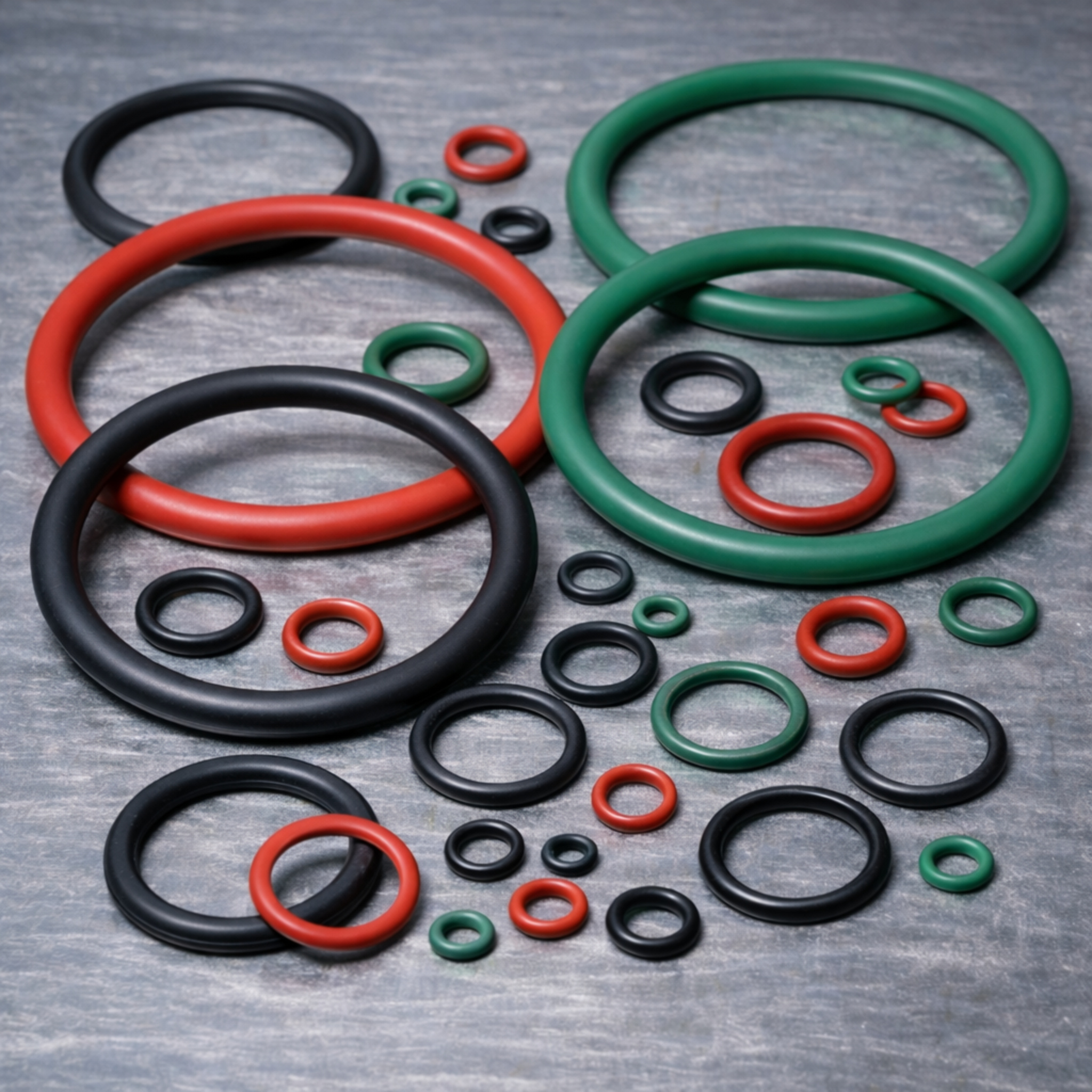
Butyl O-Rings
Butyl is a specialty elastomer best known for very low gas permeability. It is useful in vacuum and gas-retention applications and in selected hot water and steam-related environments.
Typical temperature rangeAbout -50°C to +120°C typical.
Other namesButyl, IIR
Hardness optionsCommon butyl compounds are often offered around 70 Shore A.
Compliance optionsDepending on compound, Butyl may be available in low-extractables options, life-science-oriented grades, and other application-specific declarations.
Best used for
- Low gas permeability
- Vacuum service
- Gas sealing
- Selected steam-related service
- Controlled-permeation applications
Key advantages
- Very low gas permeability
- Useful in vacuum and gas-retention applications
- Good weather resistance
- Good with hot water and steam in suitable service
Performs well in
- Hot water
- Steam in suitable service
- Ozone
- Weathering
- Vacuum-related service
- Gas-retention applications
Use with caution or avoid
- Oil and fuel service
- Applications where quick rebound is critical
- Dynamic service where elastic recovery is especially important
Typical applications
- Vacuum equipment
- Gas sealing
- Controlled-atmosphere systems
- Specialty process equipment
- Hot water and steam service in selected applications
Common industries
- Vacuum equipment
- Laboratory and controlled-atmosphere systems
- Industrial process equipment
- Electrical applications
When to choose Butyl
Choose Butyl when leakage control for gases matters more than oil compatibility.
When not to choose Butyl: Avoid or review carefully when your application involves oils and fuels, dynamic service where rebound is important, or where a broader general-purpose elastomer is preferable.
Selection guide
This is a practical selection guide. Final material choice should always be checked against actual fluid, temperature, pressure, movement, environment, and any approval requirement for the exact compound.
Need help selecting the right material?
Tell us your fluid, temperature, pressure, size, and whether the seal is static or dynamic. We can help review the most suitable starting options before final size and compound selection.